

Speed Optimization

Website speed optimization in Brantford

Website speed optimization for Brantford, Ontario businesses: lighter pages, so hours, menus and booking forms appear while a customer is still deciding where to go.

  • Core Web Vitals
  • Mobile data
  • Image weight
  • Script diet
  • Caching
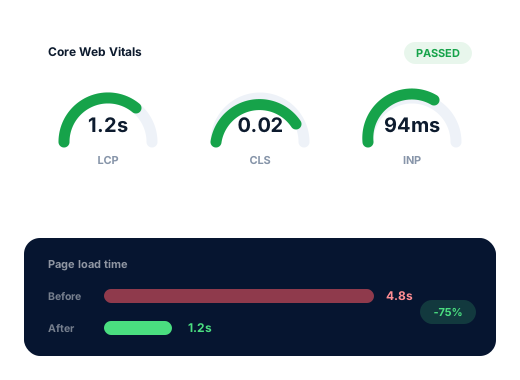
Three green speed gauges on a phone screen, a highway running through snowy fields at sunrise behind it

Website speed looks different from the customer’s side

You usually open your own website on office wifi, so most of it is already stored in your browser. A new customer, however, tends to arrive from a map listing on mobile data. They might be parked in a lot on King George Road, riding a GO bus back from Aldershot or travelling along the 403. Meanwhile, their phone has to fetch every photo, font and script from scratch.

Above all, that first visit counts. Google gathers loading and responsiveness figures from real Chrome users who opt in, and those field numbers become the Core Web Vitals behind its page experience signals. Customers are less patient than any algorithm: if your hours or menu are slow to appear, they head back to the results and choose someone else. Website speed optimization therefore starts with a stranger’s visit, not yours.

Many Brantford searches also happen in a hurry. For example, “breakfast brantford open now”, “emergency dentist brantford open now”, “brantford vet emergency” and “emergency plumber brantford” come from people who need an answer within seconds. “brantford west brant cell service” also turns up as a suggestion, a reminder that not every visitor has a strong signal. Pages built for those moments should therefore be the lightest on your site.

  • 2.5 s or less: Google’s good mark for main content
  • 200 ms or less to answer a tap (INP)
  • 28 days of real visits behind each Core Web Vitals verdict
Website speed optimization drawing: three small green dials beside a short loading bar

Search demand

Brantford searches where website speed matters

Google.ca suggestions from 5 October 2026. Nobody in Brantford searches for site speed itself, but these are the impatient visits a slow page loses first.

Search term Intent Why it matters
breakfast brantford open now High Hungry, and comparing several places before choosing one.
brantford restaurants open now High When a menu page is slow, the table goes to the next listing.
emergency dentist brantford open now Urgent Hours and phone number have to load before anything else.
brantford vet emergency Urgent An anxious owner with a sick animal has no patience for a bloated page.
emergency plumber brantford Urgent The first page to show a phone number tends to win.
brantford walk in clinic wait times Urgent Checked on a phone, often more than once in an hour.
brantford pizza open now High An order decided in seconds, so the first menu to load wins.
brantford west brant cell service Research A hint that some visitors still browse on a weak signal.

Speed optimization begins where visitors land

Hurried visitors seldom arrive on the home page. Instead, Maps and search results drop them on a menu, a contact page, an hours page or one particular service. So we begin with the landing pages your analytics show are busiest on phones and work outward from there. Website speed optimization succeeds when Google’s field data turns green, not when a single lab score improves.

Usual causes

Five common drags on website speed for small businesses

It is rarely one cause. Instead, two or three of these usually work together, which is why website speed optimization checks all five.

  1. 01

    Gallery photos straight off the camera

    Renovation, landscaping and roofing firms often upload project photos at full size, each several times wider than any screen needs. Properly sized, compressed copies, however, look identical and arrive in a fraction of the time.

  2. 02

    Menus and flyers posted as pictures

    A restaurant menu, a price sheet or an event flyer uploaded as one big image forces the phone to download all of it before anything is readable, and search engines cannot read the words inside. In contrast, real text is lighter and searchable.

  3. 03

    A theme chosen for its demo

    Multipurpose themes come with sliders, animation libraries and layouts for every kind of trade. Most of that weight travels with each page, whether or not you use it.

  4. 04

    Extras that never got removed

    Chat bubbles, review sliders, social feeds and booking embeds each contact their own servers, and so do analytics tags. Many were added for a promotion years ago and then forgotten.

  5. 05

    Crowded, low-cost hosting

    Budget plans share one server among many sites. When the neighbours are busy, your page waits before it can even start loading. Caching hides some of that delay, whereas better hosting removes it.

Google’s three measures

How Google grades website speed

These scores come from real Chrome visits gathered over the past 28 days. A page passes when at least three visits in four meet the good mark on each. Website speed optimization therefore aims to get your busiest pages past all three.

01

Largest Contentful Paint (LCP)

Loading

How long the visitor waits before the biggest element on screen, usually a heading or banner photo, finishes drawing. Good means 2.5 seconds or less. On small business sites the usual culprit is an oversized hero image or a sluggish host.


02

Interaction to Next Paint (INP)

Responsiveness

The delay from pressing a link, button or field until something visibly changes. Anything up to 200 milliseconds counts as good. Booking embeds, live chat and stacks of tracking code fight over the handset’s processor, so they are the first suspects.

03

Cumulative Layout Shift (CLS)

Stability

How much the layout lurches as late items load, which is why people tap the wrong link. A score below 0.1 counts as good, and reserving space for images, banners and embedded maps gets you there.

The work

Inside a website speed optimization project

01

A baseline first

Lab results and Google’s field data for your busiest pages are recorded before anything changes, so you can compare the before and after yourself.

02

Leaner images

Each picture cut to the width it is actually shown at, squeezed, saved as WebP or AVIF, and held back until the visitor scrolls near it.

03

Text instead of pictures of text

Menus, price lists and event details moved out of images and PDFs into real text, so they load quickly and show up in search.

04

Third-party scripts trimmed

Every outside script your pages call is listed; unused ones are removed, and chat, tracking and review widgets wait until the main content is on screen.

05

Caching tuned to your host

Finished pages stored ready to send, which spares the server from rebuilding them for each visitor, configured for your particular host instead of left on generic settings.

06

A follow-up comparison

About a month after the changes, once Google’s field data has caught up, you receive the before-and-after figures and a note on anything still worth fixing.

Done carefully

Where speed optimization should stop

The rules we follow on every account, written down so you can hold us to them.

Honestly
Beyond a certain point, shaving off more milliseconds impresses engineers, not customers. We stop where your visitors stop noticing.

Google treats page experience as one signal among many, so speed work is no ranking guarantee. What it reliably does, though, is keep more of the people who tap your listing on the page long enough to call. Website speed optimization is a one-time project, quoted after an audit.

Test setup
Typical handset, no wifi
Reporting
Before, after and a month later
Price
One-time quote after an audit
Ask us about your business
Fallen autumn leaves around an open laptop with ranking graphs, a phone showing a map and a notebook of sketched site plans
  • Features you rely on stay, even when cutting them would raise a score.
  • No cloaking or tricks that serve Google a different page.
  • Speed never sold to you as a ranking fix.
  • No full rebuild when targeted fixes will do.

How we work

How the work runs

From the first audit through to a monthly report written in plain language.

  1. 01

    Audit

    We review your website and Business Profile, then search from several parts of Brantford to see where you show up today.

  2. 02

    Prioritize

    We shortlist the searches that tend to end in a booking or a quote and give each its own page.

  3. 03

    Fix and build

    Profile, website and content changes, starting with the ones expected to move results first.

  4. 04

    Report

    One page each month about enquiries, rankings and the jobs we have lined up for next.

Questions

Website speed questions from Brantford owners

How can we see our site the way a customer does?

Switch your phone to mobile data, open a private tab and count the seconds until your hours and call button appear. Then, for measured figures, PageSpeed Insights reports real-visitor data where a page gets enough traffic, plus a lab test for any address.

What counts as fast enough?

Google’s good marks make a sensible target. In short: main content within 2.5 seconds, a reply to every tap within 200 milliseconds, and layout shift below 0.1. Past those lines, however, most visitors cannot feel the difference.

Will a faster site move us up in Google?

Not much on its own. When two pages are otherwise closely matched it can tip the balance, but relevance and useful content count for far more. The dependable gain is fewer visitors giving up before they call.

We post our menu as a PDF download. Does that slow things down?

Usually. After all, a PDF or a photo of a menu is heavy on a phone, awkward to zoom and hard for search engines to read. A simple text menu on an ordinary page loads faster and can show up when someone searches for a dish.

How soon will we see the difference?

The fixes often take days on a small site. The proof takes longer: Google’s field data covers the previous 28 days, so the green result in Search Console trails the work by about a month.

What does speed work cost?

Website speed optimization is quoted once, in Canadian dollars, after we audit the site and know what is dragging it down. Once the fixes are in, holding on to the gains falls under routine upkeep, which every monthly plan ($250, $350 or $550) already includes.

Further reading

From the blog

Related reading for Brantford, Ontario owners on this topic.

Can Brantford customers find you right now?

A free look at where you rank from West Brant to Eagle Place, who sits above you and what to fix first.

Request my free audit